ASMR Recording & Mastering Guide — Capture Whispers Beautifully
Complete guide to recording and mastering ASMR audio. Learn noise floor management, dynamic range optimization, platform-specific LUFS settings, and best practices for whisper-quiet content.
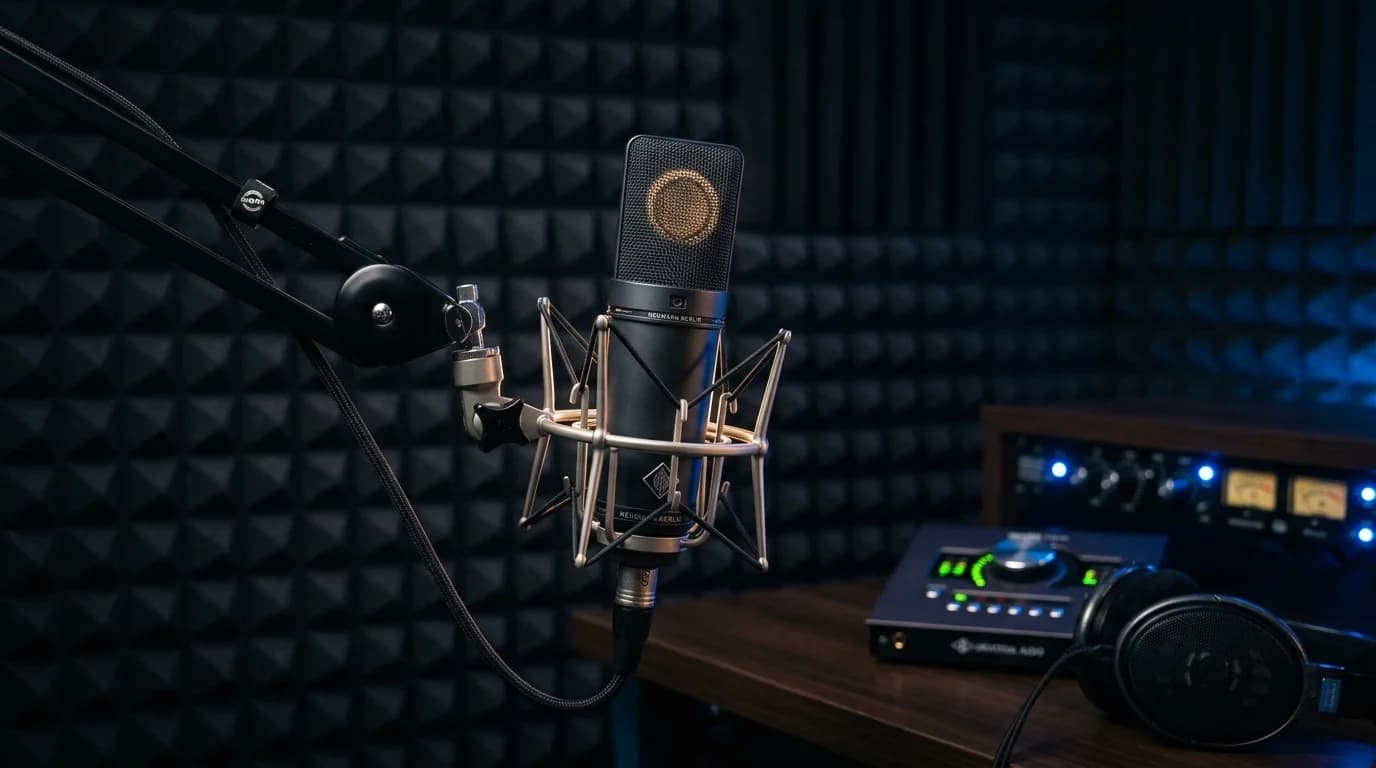
ASMR Audio Requires a Completely Different Approach#
ASMR content — whispers, tapping, brushing, and other delicate sounds — demands recording and mastering techniques that are fundamentally different from standard audio production. The core challenge is handling extremely quiet signals where conventional rules simply don't apply.
Noise floor management, dynamic range preservation, and platform-specific loudness settings all require ASMR-specific strategies.
ASMR Volume Characteristics#
Why Low Volume IS the Content#
| Content Type | Average Loudness | Dynamic Range |
|---|---|---|
| Pop music | -14 LUFS | 6–10 dB |
| Podcast | -16 LUFS | 8–12 dB |
| Game streaming | -14 LUFS | 10–15 dB |
| ASMR | -20 to -24 LUFS | 15–25 dB |
ASMR sits far below other content in loudness and far above in dynamic range. Every production decision must account for these characteristics.
Why You Can't Just "Turn It Up"#
- ASMR triggers vanish — Boosting volume turns whispers into normal speech, killing the tingle response
- Noise amplification — Raising signal level raises noise floor proportionally 3. Intimacy destroyed — The sensation of someone whispering in your ear disappears
Recording Environment#
Microphone Selection#
| Type | Example | Strength | Price Range |
|---|---|---|---|
| Binaural | 3Dio Free Space | Immersive 3D capture | $400–$1,200 |
| Condenser pair | Rode NT5 pair | Clean stereo recording | $350–$500 |
| Large diaphragm | AT4050 | Ultra-low noise, high sensitivity | $500–$800 |
| USB mic | Blue Yeti | Accessible, beginner-friendly | $80–$150 |
Binaural microphones excel at recreating the "right in your ear" sensation that defines premium ASMR.
Noise Control (10x More Important Than Normal)#
- HVAC off — Fan noise is ASMR's worst enemy
- Refrigerator awareness — Compressors kick in randomly 3. Double-seal windows — Block traffic, birds, and weather 4. Acoustic treatment — Absorb room reflections 5. Record late at night — Ambient noise is lowest 6. Electronics in airplane mode — Eliminate phone buzzing and interference
Target Noise Floor: -70 dBFS#
Standard podcast recording targets -50 to -60 dBFS noise floor. For ASMR, aim for -70 dBFS or lower. Test by recording 30 seconds of silence and checking the peak level on your DAW meter.
Mastering Techniques#
EQ — Subtractive First#
- Below 30 Hz: High-pass filter (steep cut)
- 60–100 Hz: -2 to -3 dB (remove low-end rumble)
- 2–6 kHz: +1 to +2 dB (enhance whisper consonants — watch for sibilance)
- 8–12 kHz: +1 dB (add air and delicacy)
- 14 kHz+: Fine-tune as needed (excessive boost causes harshness)
Compression — Minimal#
ASMR's wide dynamic range is a feature, not a bug. Use compression sparingly:
- Threshold: -30 to -25 dBFS (catch only peaks)
- Ratio: 2:1 (gentle)
- Attack: 20–30 ms (preserve natural onset)
- Release: 200–300 ms (slow recovery)
- Makeup gain: 0 to +1 dB (nearly none)
Noise Reduction#
When recording couldn't eliminate all noise, use software processing:
- iZotope RX — Industry standard (Spectral De-noise)
- Audacity — Free option (Noise Profile capture + reduction)
- Adobe Audition — Adaptive noise reduction
Warning: Over-processing creates "underwater" artifacts. Apply the minimum effective amount.
Limiter — Ear Protection#
Protect listeners from sudden loud sounds (sneezes, dropped objects):
- Ceiling: -3 dBFS
- True Peak: -1 dBTP
Platform-Specific LUFS#
| Platform | General Content | ASMR Recommended |
|---|---|---|
| YouTube | -14 LUFS | -20 to -22 LUFS |
| Spotify (podcast) | -14 LUFS | -18 to -20 LUFS |
| Apple Podcasts | -16 LUFS | -20 to -22 LUFS |
| TikTok | -14 LUFS | -16 to -18 LUFS |
YouTube caution: YouTube's normalization targets -14 LUFS and will try to boost ASMR content at -22 LUFS. This amplifies noise. Minimize your noise floor during mastering to mitigate this.
Bit Depth and Sample Rate#
- Recording: 24-bit / 96 kHz (maximum dynamic range)
- Export: 24-bit / 48 kHz (YouTube) or 16-bit / 44.1 kHz (streaming)
The 48 dB dynamic range advantage of 24-bit over 16-bit is significant for ASMR's quiet signal levels.
Export Best Practices#
| Purpose | Format | Specs |
|---|---|---|
| YouTube upload | WAV or FLAC | 24-bit / 48 kHz |
| Podcast distribution | AAC or MP3 | 256 kbps+ |
| Sales (e.g., Gumroad) | FLAC or WAV | 24-bit / 96 kHz |
| Social media clips | AAC | 256 kbps |
Pre-Export Checklist#
- Noise floor below -60 dBFS
True Peak does not exceed -1 dBTP 3. Sudden loud sounds are caught by the limiter 4. 0.5–1 second of silence at start and end 5. Stereo image sounds natural (especially for binaural recordings)
Summary#
- Low volume IS the value of ASMR — don't boost carelessly
- Noise floor target: -70 dBFS — environment preparation is everything 3. Minimal compression — preserve the wide dynamic range 4. Subtractive EQ — enhance ASMR textures without damaging them 5. Platform loudness awareness — adjust LUFS targets for ASMR content 6. Record in 24-bit — maximize available dynamic range 7. Always set a limiter — protect listeners' ears from unexpected peaks
Delivering delicate sounds beautifully requires meticulous environment preparation and restrained mastering. The less you process, the better ASMR sounds.
Get DJ mastering tips
Weekly tips for music production.
Related Articles
How to A/B Compare Audio Like a Pro — Train Your Ears
Learn the correct way to A/B compare audio before and after processing. Eliminate loudness bias, use blind testing, and focus on the right frequency bands to make better mixing and mastering decisions.
Mastering Tips for Bandcamp Releases — Self-Release Like a Pro
Essential mastering tips for Bandcamp self-releases. Learn optimal upload formats, genre-specific LUFS targets, album consistency techniques, and how DeckReady simplifies Bandcamp mastering.
How to Master Audio for Car Listening — Drive BGM Optimization
Master your music for car audio playback. Learn about in-car acoustics, road noise compensation, subwoofer considerations, and how DeckReady's Club preset optimizes tracks for driving.
How to Improve DJ Mix Recording Quality for Streaming and Archives
Learn the best recording settings, post-recording mastering techniques, and platform-specific optimization for SoundCloud, Mixcloud, and YouTube DJ mixes.