Retail Store BGM Guide — How Music Drives Sales in Fashion Shops
Learn how to select and optimize background music for apparel stores. Discover the relationship between music volume and customer dwell time, brand-aligned genre selection, and how to use DeckReady's Lounge preset for retail.
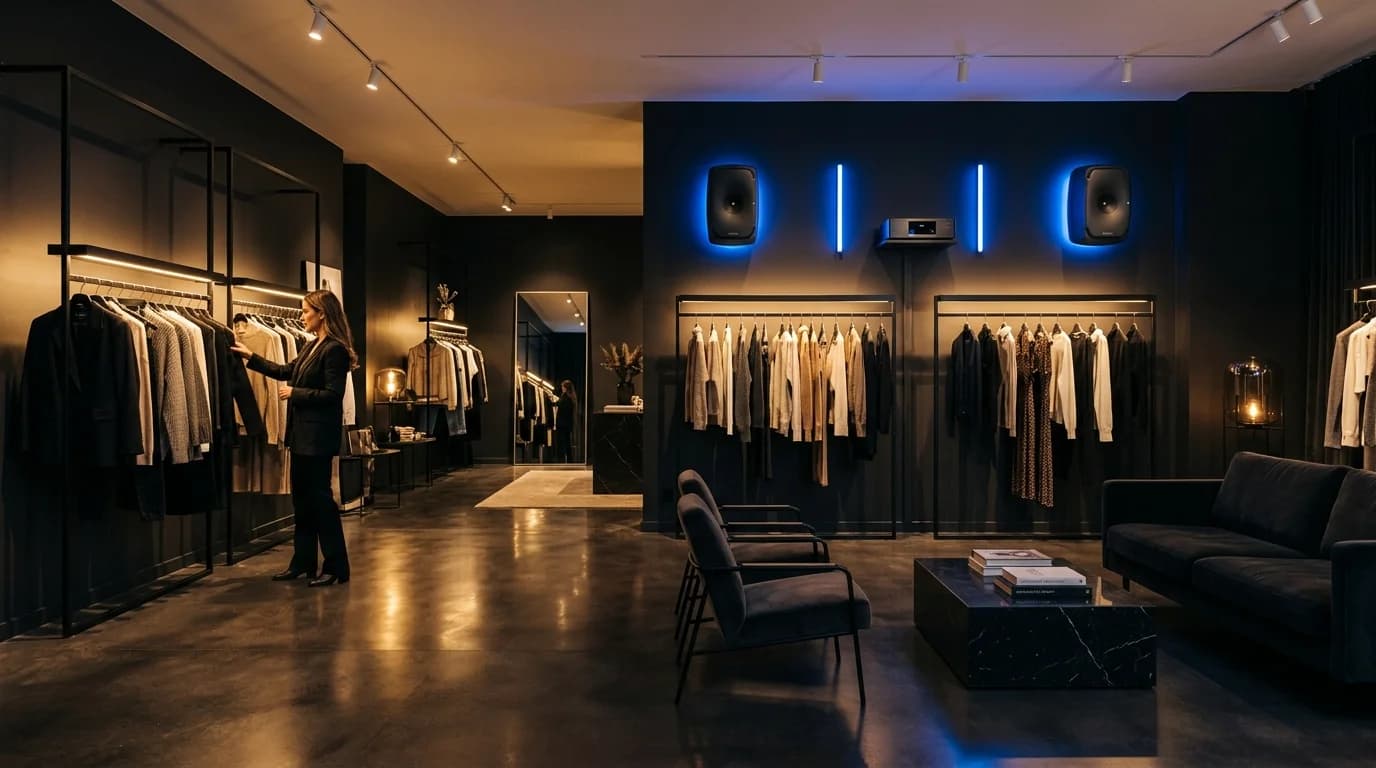
BGM Is Your Store's Second Interior Design#
When a customer walks into a fashion store, the first impression isn't just visual. The music playing in the background communicates brand identity as powerfully as the window display.
Consumer behavior research shows that well-chosen BGM can increase average purchase amounts by roughly 20%. On the flip side, music that clashes with the brand makes customers feel vaguely uncomfortable, shortening their stay.
This guide covers actionable strategies for optimizing BGM in apparel retail environments.
Matching Music to Brand Identity#
Brand Positioning x Music Matrix#
| Brand Type | Target Demographic | Recommended Genres | Tempo |
|---|---|---|---|
| Luxury | 30–50, affluent | Jazz, classical crossover | 60–80 BPM |
| Designer / Mode | 20–40, fashion-forward | Electronica, minimal techno | 100–120 BPM |
| Casual | 20–30 | Pop, indie rock | 110–130 BPM |
| Streetwear | Teens–30s | Hip-hop, trap, R&B | 80–100 BPM |
| Natural / Ethical | 20–40 | Acoustic, folk | 80–100 BPM |
| Select shop | Broad | Genre mix | 90–120 BPM |
Three Rules for Track Selection#
Rule 1: Aim Slightly Above Your Customer Don't play exactly what your customers listen to at home. Choose selections that are one notch more refined. This signals taste and elevates perceived brand value.
Rule 2: Mind the Lyrics In your local language, lyrics are understood directly — avoid negative or vulgar content. Even foreign-language tracks may have well-known lyrics that customers recognize.
Rule 3: Reflect the Season Spring/summer collections pair with bright, upbeat tracks. Fall/winter calls for warmer, acoustic textures. Seasonal alignment creates cohesion.
Volume and Customer Dwell Time#
How Volume Affects Buying Behavior#
Low volume (55–60 dB):
- Longer dwell time
- Customers browse more carefully
- Higher-ticket purchases increase
- Easier staff-customer interaction
Higher volume (70–75 dB):
- Faster turnover
- Impulse buying increases
- Effective during sales events
- Attracts younger demographics
Recommended Volume by Brand Type#
| Brand Type | Volume | Rationale |
|---|---|---|
| Luxury | 50–55 dB | Quiet space conveys premium feel |
| Designer | 65–70 dB | Music is part of the spatial experience |
| Casual | 60–65 dB | Balanced for conversation |
| Streetwear | 70–75 dB | Cultural energy front and center |
| Natural | 50–55 dB | Calm atmosphere priority |
Sale Period Strategy#
During sales, increasing BGM volume by 5–8 dB boosts both purchase intent and turnover. But never make it so loud that normal conversation becomes impossible — that's counterproductive.
Using the Lounge Preset for Retail#
DeckReady's Lounge preset is well-suited for most apparel environments, especially select shops and casual brands.
Why Lounge Works for Retail#
- Low-end reduction — Removes oppressive bass for a clean, open space
- Mid-range warmth — Acoustic instruments and vocals sound natural 3. High-end sparkle — Adds brightness and spatial openness 4. Dynamic leveling — Eliminates jarring volume jumps between tracks
Adjustments by Brand Type#
Luxury brands: Start with the Lounge preset, then further reduce bass and slightly tame upper mids for "elegant quietness."
Streetwear brands: The Club preset is a better starting point, but dial back the volume and bass boost to keep it in control.
Time-Based BGM Programming#
Opening to Mid-Morning (before 11 AM)#
- Tempo: 100–110 BPM
- Volume: 3–5 dB below standard
- Genre: Acoustic, soft pop
Peak Hours (11 AM – 3 PM)#
- Standard tempo for your brand
- Standard volume
- Core brand genre
Evening (5 – 9 PM)#
- Tempo: 90–110 BPM
- Volume: slightly lower
- Genre: Jazz, electronica, chillout
Speaker Placement Tips#
Store Layout Integration#
- Near entrance — Slightly louder to draw foot traffic
- Near fitting rooms — Moderate BGM for a relaxed experience 3. Register area — Low enough for smooth conversation 4. Main floor — Even sound distribution
Eliminating Dead Spots#
In larger stores, areas far from speakers can become unnaturally quiet. Use ceiling-mounted speakers at even intervals or distribute small speakers throughout the space.
Copyright and Cost Management#
| Method | Monthly Cost | Pros | Cons |
|---|---|---|---|
| Commercial BGM service | $20–50 | Licensed, curated | Limited customization |
| Royalty-free music | $10–30 | Low cost, flexible | Requires curation effort |
| PRO license (ASCAP/BMI) | $50–200/yr | Use any music freely | Paperwork required |
For brand-focused retailers, curating a custom playlist from royalty-free sources gives the best balance of control and affordability.
Summary#
- Brand-aligned selection is the top priority
- Volume matches brand type and target audience 3. Low volume extends dwell time; high volume increases turnover 4. Lounge preset as a base, fine-tuned for your brand 5. Time-based playlists adapt to shifting customer profiles 6. Speaker placement eliminates dead spots 7. Copyright compliance is non-negotiable
BGM is your second interior designer. Use sound to communicate brand identity and enrich the shopping experience alongside your visual merchandising.
Get DJ mastering tips
Weekly tips for music production.
Related Articles
Bar BGM Setup Guide — Volume, EQ & Atmosphere by Venue Type
Complete guide to bar background music setup. Learn ideal volume levels by bar type, how to balance music with conversation, bass cut techniques, and how DeckReady's Lounge preset optimizes bar audio.
Cafe BGM Guide — Music Selection & Audio Quality Tips for Owners
What volume should cafe BGM be? Exact dB levels, ideal background music volume for customers, time-based playlist design, and how to fix track-to-track volume jumps automatically with DeckReady.
Hair Salon BGM Guide: Volume Settings and Music Selection for Client Comfort
Complete guide to hair salon and beauty parlor BGM. Learn ideal volume levels by service type, music genre selection by salon concept, shampoo station considerations, and how to maintain consistent playlist volume.