Hotel Lounge BGM: Audio Settings That Create a Luxury Atmosphere
Design the perfect audio environment for hotel lounges and lobbies. Learn volume guidelines, classical and jazz processing, low-frequency management, time-based playlist scheduling, and speaker placement for premium hospitality.
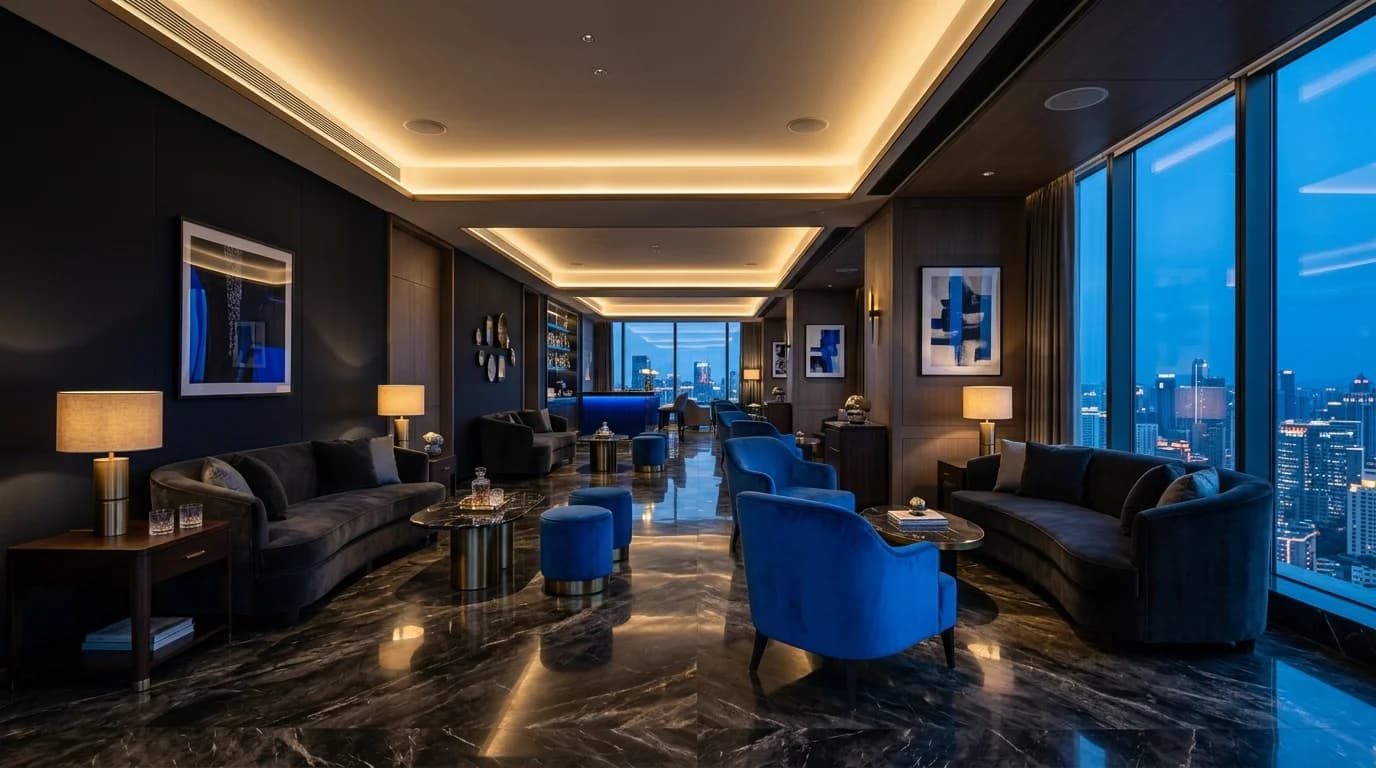
Lounge Audio Is Part of the Guest Experience#
When guests enter a hotel lounge, visual elegance isn't the only thing they register. The quality and volume of background music silently communicates the property's caliber.
Top-tier hotels invest heavily in BGM — some retain dedicated acoustic consultants. This is because lounge BGM isn't simply music playing in the background. It's a core component of hospitality.
This guide provides practical guidelines for BGM volume, selection, processing, and scheduling in hotel lounge environments.
Volume Settings That Signal Luxury#
The "Barely There" Principle#
The most important rule for hotel lounge BGM: music should blend so naturally into the environment that guests don't consciously notice it. If a guest actively thinks "there's music playing," the volume is already too high.
Recommended Volume Levels#
| Area | Recommended Volume | Reference |
|---|---|---|
| Main lounge | 45–50dB | Similar to a quiet residential interior |
| Lobby | 48–53dB | Slightly above lounge level |
| Bar area | 55–60dB | Varies with time of day |
| Restaurant | 50–55dB | Harmonize with tableware sounds |
| Elevator hall | 40–45dB | Barely perceptible |
The Golden Rule#
The golden rule for hotel lounge volume is: "Two people sitting two meters apart can converse in soft voices." Lounges frequently host business meetings and negotiations, so this threshold must never be exceeded.
BGM also serves a privacy function — "sound masking." Properly calibrated BGM prevents conversations at one table from carrying to adjacent tables.
Processing Classical and Jazz#
Why These Genres Dominate#
Classical and jazz are lounge BGM standards for clear reasons:
- Wide dynamic range: Contrasts between quiet and powerful passages add spatial depth
- Timelessness: Not subject to trends, accepted across all age groups 3. Luxury associations: Culturally recognized as markers of sophistication 4. Minimal vocal interference: Instrumental or English-language vocals don't compete with conversation
Classical Music Processing#
Classical music's wide dynamic range creates a specific challenge for lounge BGM: pianissimo passages become inaudible while fortissimo moments suddenly intrude.
Recommended processing:
- Mild compression: 2:1–3:1 ratio to gently narrow dynamic range
- Slow attack: 30–50ms to preserve natural transient response
- Long release: 300–500ms for natural decay
- Conservative gain reduction: Maximum 3–4dB
Excessive compression destroys musical expressiveness. Prioritize naturalness above all.
Jazz Processing#
Jazz has a narrower dynamic range than classical but can spike during improvisation passages.
- Limiter: Cap peak volume to prevent sudden loudness spikes
- Low-end management: Gently cut upright bass low frequencies to reduce boominess
- Mid-high adjustment: Fine-tune 2–4kHz to prevent saxophone and trumpet from becoming piercing
Low-Frequency Cuts for Refined Sound#
Why Low-Frequency Reduction Matters#
In hotel lounges, cutting below 100Hz is a key technique for creating a refined audio environment.
- Eliminates oppressiveness: Heavy bass makes spaces feel cramped
- Improves speech clarity: Less low-end means the 200Hz–4kHz speech range comes through cleaner 3. Prevents speaker distortion: Small ceiling speakers struggle with bass and distort when forced 4. Projects refinement: Premium lounge audio is characteristically "light and transparent"
Recommended EQ Settings#
- Below 80Hz: High-pass filter (-12dB/oct)
- 100–200Hz: -3 to -5dB reduction
- 200–500Hz: Flat or slight reduction
- 1–4kHz: +1 to +2dB boost (clarify speech frequencies)
- Above 8kHz: +1dB boost (add air)
This produces BGM that sounds "light as air" and never interferes with guest conversation.
Time-Based BGM Scheduling#
Hotel lounges serve different purposes throughout the day. BGM must shift accordingly.
Morning (6:00–10:00)#
Gentle, bright music to start guests' days positively.
- Genre: Baroque, bossa nova, soft jazz
- Tempo: 60–80 BPM
- Volume: 45–48dB (quietest setting)
- Character: Light and optimistic
Daytime (10:00–17:00)#
Business meetings and afternoon tea dominate this window.
- Genre: Piano jazz, chamber music, acoustic
- Tempo: 70–90 BPM
- Volume: 48–52dB
- Character: Intellectual and refined
Evening (17:00–21:00)#
Pre-dinner cocktails and socializing increase.
- Genre: Smooth jazz, vocal jazz, lounge music
- Tempo: 80–100 BPM
- Volume: 52–58dB (raised slightly)
- Character: Elegant and social
Late Night (21:00+)#
Bar-focused operations call for intimate atmosphere.
- Genre: Slow ballads, deep jazz, chillout
- Tempo: 60–80 BPM
- Volume: 50–55dB
- Character: Moody and intimate
Audio System Selection#
Ceiling-Mounted Speakers#
Hotel lounges require speakers that are visually invisible. Ceiling-mounted units distributed evenly ensure uniform volume throughout the space.
Multi-Zone Control#
Ideally, the lounge is divided into independently controllable zones — bar counter, sofa seating, private areas — each with separate volume and playlist management.
Live Music Integration#
Some hotel lounges feature live piano during specific hours. The transition between live performance and BGM system requires seamless handoff.
- Begin lowering BGM volume 30 minutes before the performance
- BGM off completely during live music
- Fade BGM back in after the performance concludes
Key Takeaways#
- Volume should be "naturally invisible" (45–50dB target)
- Apply mild compression to classical and jazz to even out dynamics 3. Cut below 100Hz for light, refined sound 4. Schedule genre, tempo, and volume by time of day 5. Use ceiling-mounted speakers for visual discretion 6. Implement multi-zone control for seat-specific optimization 7. Normalize loudness across all tracks to eliminate jarring song transitions
The best hospitality BGM is the music guests never consciously notice — and yet would immediately miss if it stopped.
Get DJ mastering tips
Weekly tips for music production.
Related Articles
BGM Volume Guide for Restaurants & Bars [Fix Audio in Minutes]
BGM volume meaning explained: the right dB levels for restaurants, bars, and cafes. Fix inconsistent background music volume, overpowering bass, and poor audio quality with DeckReady's Lounge preset.
Bar BGM Setup Guide — Volume, EQ & Atmosphere by Venue Type
Complete guide to bar background music setup. Learn ideal volume levels by bar type, how to balance music with conversation, bass cut techniques, and how DeckReady's Lounge preset optimizes bar audio.
Fitness Gym BGM Settings: Audio That Boosts Workout Performance
Optimize your gym's BGM for maximum workout motivation. Learn zone-specific volume settings, BPM recommendations, the science of music and exercise performance, and how Club presets enhance training energy.
Hair Salon BGM Guide: Volume Settings and Music Selection for Client Comfort
Complete guide to hair salon and beauty parlor BGM. Learn ideal volume levels by service type, music genre selection by salon concept, shampoo station considerations, and how to maintain consistent playlist volume.