Fitness Gym BGM Settings: Audio That Boosts Workout Performance
Optimize your gym's BGM for maximum workout motivation. Learn zone-specific volume settings, BPM recommendations, the science of music and exercise performance, and how Club presets enhance training energy.
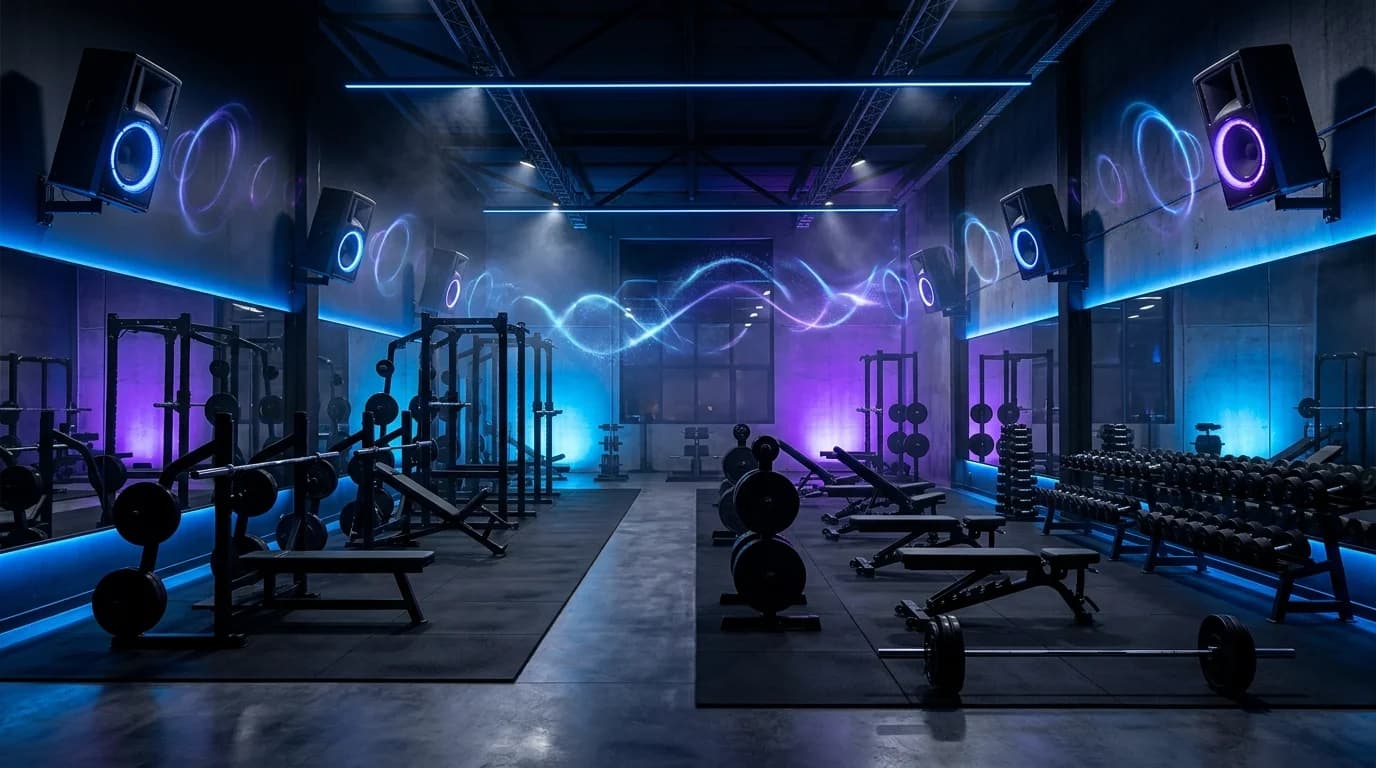
Gym BGM Needs More Than Just Being Audible#
Fitness gym BGM demands a completely different approach from a cafe or salon. What a gym needs isn't "pleasantness" — it's energy that drives motivation and unlocks performance.
Research shows that exercising with music at the right tempo and volume reduces perceived exertion by approximately 12% and can improve endurance performance by up to 15%. BGM settings don't just affect member satisfaction — they directly influence training outcomes.
This guide covers optimal BGM volume and loudness settings for each gym zone, plus strategies for selection and scheduling.
How High-Energy BGM Affects Training#
The Science of Music and Performance#
Sports psychology research has demonstrated these effects:
- Ergogenic effect: Music directly improves exercise capacity
- Attention diversion: Shifts focus away from fatigue and discomfort 3. Rhythm synchronization: Movement stabilizes when synced to tempo 4. Arousal regulation: Promotes adrenaline release
Tracks in the 130–150 BPM range pair especially well with high-intensity training and are widely adopted across gyms.
Volume vs. Loudness#
When discussing gym BGM, understanding the difference between volume and loudness is important.
- Volume: Simple amplitude. Controlled by speaker volume
- Loudness: Perceived power and impact. Controlled by compression and EQ
At the same volume, a track with higher loudness feels "more powerful" and "more energizing." In gym settings, controlling this perceived loudness is what matters.
Zone-Specific Volume Settings#
Weight Training Area (Free Weights and Machines)#
This zone can support the highest BGM volume. Metal-on-metal sounds from weights and machine noise require BGM that holds its own.
- Recommended volume: 75–80dB
- Recommended tempo: 130–150 BPM
- Best genres: Hip-hop, EDM, hard rock, trap
- Low-end treatment: Boost for physical bass impact
Important: sustained exposure above 80dB risks hearing damage, so strictly respect the ceiling.
Cardio Area (Treadmills and Bikes)#
Many members use earphones for personal music in cardio zones. BGM should sit below earphone levels while remaining pleasant for those without headphones.
- Recommended volume: 68–73dB
- Recommended tempo: 120–140 BPM
- Best genres: Pop, dance music, electro
- Key point: Consistent rhythm tracks support pacing
Stretching and Yoga Area#
Relaxation zones require significantly lower volume with calming atmosphere. Ideally these areas are physically separated from weight areas or use independent audio systems.
- Recommended volume: 55–60dB
- Recommended tempo: 60–90 BPM
- Best genres: Ambient, chillout, healing music
- Note: Sound isolation from weight area is essential
Locker Room and Reception#
Pre- and post-workout spaces don't need training-level energy, but light BGM that builds anticipation for the workout creates a positive impression.
- Recommended volume: 60–65dB
- Best genres: Pop, R&B, lighter EDM
Using Club Presets for Gym Audio#
Club presets built into audio software and hardware work exceptionally well for gym BGM.
Club Preset Characteristics#
- Bass boost: Kicks and basslines feel physical and impactful
- Clear mids: Vocals and synth melodies stay present
- Bright highs: Hi-hats and cymbals have crisp energy
- Compression: Narrower dynamic range maintains consistent energy
Customization for Gym Use#
Fine-tune the Club preset for gym environments:
- Reduce sub-bass (20–60Hz): Prevents speaker distortion
- Boost mid-bass (80–200Hz): Enhances physical impact 3. Adjust 2–4kHz: Set so that conversation is barely possible
Apply loudness normalization across your entire playlist so volume stays consistent between tracks. Volume jumps during song changes disrupt member concentration.
Playlist Best Practices#
Time-Based Playlists#
Gym demographics and energy levels shift throughout the day.
| Time Slot | Typical Members | Tempo | Genre |
|---|---|---|---|
| Early morning (6–9) | Pre-work professionals | 120–130 BPM | Pop, light EDM |
| Morning (9–12) | Stay-at-home, seniors | 110–120 BPM | Pop, R&B |
| Afternoon (12–5) | Freelancers, students | 130–140 BPM | EDM, hip-hop |
| Evening (5–10) | After-work crowd | 140–150 BPM | Trap, hard EDM |
| Late night (10–12) | Hardcore trainees | 130–145 BPM | Metal, hard rock |
Track Sequencing#
Strategic track ordering improves the experience:
- Warm-up periods: Start with lower tempo, gradually increase
- Peak hours: Concentrate high-tempo tracks
- Cool-down periods: Gradually decrease tempo
Speaker Placement and Acoustic Design#
Speaker Placement Principles#
- Ceiling-mounted speakers as the foundation for even sound distribution
- Add subwoofers to weight areas for low-end reinforcement 3. Use directional speakers at zone boundaries to prevent sound bleed 4. Eliminate dead spots through careful layout planning
Zone Separation#
Ideally, each area operates as an independent audio zone with separate volume, EQ, and playlist controls. This lets you serve every member's needs simultaneously.
Legal and Member Considerations#
Noise Regulations#
Gym BGM can create noise issues, especially for building tenants. Check local regulations and building management rules for sound limits.
Member Feedback#
Complaints about volume or music selection are inevitable. Build a regular feedback mechanism — surveys, suggestion boxes — and adjust accordingly.
Key Takeaways#
- Manage volume by zone (weights 75–80dB, cardio 68–73dB, stretching 55–60dB)
- Match tempo to training intensity 3. Use Club presets for physical, energizing loudness 4. Rotate playlists by time of day to match member demographics 5. Normalize loudness across all tracks to eliminate jarring song changes 6. Invest in zone-capable audio systems for independent area control 7. Monitor noise compliance and member satisfaction regularly
Well-configured BGM is one of the most powerful tools for simultaneously boosting training effectiveness and member satisfaction.
Get DJ mastering tips
Weekly tips for music production.
Related Articles
Audio Settings for Educational YouTube Videos: A Complete Guide
Optimize audio for educational and tutorial YouTube videos. Learn the ideal loudness levels, BGM-to-narration balance, EQ settings for listener comfort, and export configurations for maximum clarity.
Game Streaming Audio Guide: Balancing Game Sound, Mic, and BGM
Master the audio balance for game streaming and let's plays. Learn optimal volume ratios for game audio, microphone, and BGM, plus OBS filter chains, compression settings, and platform-specific loudness targets.
Hotel Lounge BGM: Audio Settings That Create a Luxury Atmosphere
Design the perfect audio environment for hotel lounges and lobbies. Learn volume guidelines, classical and jazz processing, low-frequency management, time-based playlist scheduling, and speaker placement for premium hospitality.
Instagram Reels Audio Optimization: Settings That Get Views
Optimize your Instagram Reels audio for maximum engagement. Learn the -14 LUFS target, BGM-to-voice balance ratios, in-app vs. pre-processing workflows, and content-specific audio design strategies.